For a focused tarot question, start with one to three cards. One card offers a prompt; three can add context without making a simple question feel complicated. A larger spread can help when each position has a reason, but drawing more cards does not guarantee a more accurate answer.
Would you like a guided reading?
Compare written and live formats through Spells & Psychics and check current price and terms. For love questions, We Love Spells also explains its private ritual options and service details.
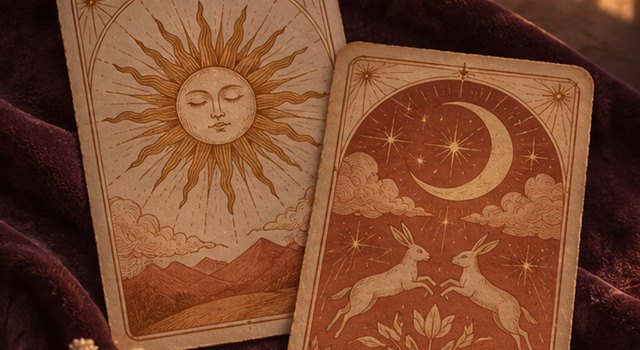
Choose a spread to match your question
One card: A simple theme, such as “What should I pay attention to today?” is easy to record and revisit.
Three cards: Give each position a purpose, for example “What I know / What I need to consider / One next step I can choose.” Another layout is “Situation / Challenge / Perspective.” These are prompts, not fixed rules about past, present, and future.
Five cards: Use five when positions answer distinct parts of a question: situation, feelings, a resource, a concern, and a practical next step. If positions repeat the same idea, a shorter spread may be easier to read.
How to draw and interpret
- Write a clear, open-ended question about something you can reflect on.
- Choose the deck and spread before drawing.
- Read the guidebook and note your first response to the images.
- Interpret each card in relation to its position and question.
- Write one practical reflection, then pause before drawing again.
If deciding whether to contact someone, cards cannot confirm what they will do. They can prompt you to consider your reason for reaching out, whether contact would be welcome, and what you need for either outcome.
When to stop pulling cards
If you draw again because you dislike the answer, pause. Repeating the question can create more interpretations without new information. Take a break and return to real-world facts. Never let a reading pressure you to ignore a boundary or spend beyond your means.
A spread's card count is a practical choice, not a measure of a reader's skill. Tarot decks commonly include 78 cards; a reading uses only what its layout needs. The Metropolitan Museum of Art offers an overview of tarot's history and structure.
Set a stopping point before you begin
Decide in advance that you will draw one spread for one question, then record your thoughts and stop. This helps prevent a loop where repeated pulls create contradictory answers and more anxiety. If the question still feels important after a break, look at what information you can get through a conversation or a practical next step. A tarot spread is easier to reflect on when every card has a clear role and you give yourself room to think.
Belinda's perspective
I prefer a spread with a clear question and a reason for every position. A smaller layout can keep a reading focused. Important choices should also use practical information, not only card symbolism.
Common questions
Is one card enough?
It can be enough for a focused reflection prompt.
Is three cards always past, present, future?
No. Choose positions that fit your question.
Should I shuffle until a card falls out?
Deck handling is personal. Choose a consistent method instead of searching for a particular answer.
Try our three-card tarot spread, compare reading options, or review the love ritual information.