There is no reliable way to measure a tarot reading as a guaranteed prediction of a person's future. Tarot is an interpretive spiritual practice: readers use a deck's imagery, a question, and their tradition to offer an interpretation. Some clients find this meaningful, but a reading is not proof that an event will happen.
Choose a reading format that suits you
Spells & Psychics lists written and live options. Review the current price, format, privacy terms, and inclusions. If your question is about love, you can also read about private rituals through We Love Spells.
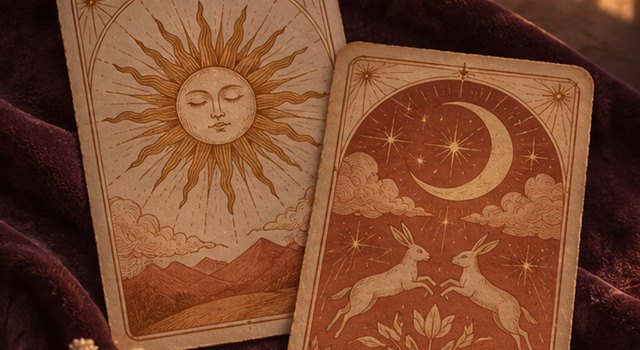
What people may mean by “accurate”
Someone might mean that a reading named a feeling they recognise; another may mean a prediction matched an event. Those are different claims. A reflection can feel relevant without proving that cards predict the future or access another person's private thoughts.
Readings differ because decks, questions, traditions, and readers differ. A card's meaning depends on its position and surrounding cards. The Metropolitan Museum of Art's history of tarot cards traces how the deck's use and associations changed over time.
Use a reading as a prompt, then check facts
Separate symbolic ideas from what you can verify. If a reading raises a relationship concern, check it through communication and observed behaviour. For health, legal, or financial concerns, seek qualified support rather than relying on tarot to diagnose or decide.
A useful question might be “What perspective could help me think this through?” rather than “What will definitely happen?” This leaves room for uncertainty and your own choices.
Assess a reader before booking
- Check format, price, delivery timing, and privacy information.
- Look for a clear description of what is included.
- Notice whether the reader lets you make your own decisions.
- Be wary of guarantees, fear-based pressure, or repeated requests for payment to prevent harm.
Prepare with our guide to questions for a love reading. If trying a self-reading, see our three-card tarot spread.
A note on memory and confirmation
People naturally remember predictions that seem to match later events and may forget vague or incorrect ones. This does not mean a reading cannot feel personally meaningful; it means a strong feeling of recognition is different from independent proof. If you want to evaluate a reading for yourself, write down the exact wording before an outcome is known, avoid changing the interpretation afterwards, and keep important decisions grounded in information you can check.
Belinda's perspective
I don't describe tarot as a certainty machine. I see it as a symbolic conversation that can help someone put a question into words. Keep what feels useful, leave what does not, and make important decisions with evidence and appropriate support.
Common questions
Can tarot predict the future?
Some readers offer future-oriented interpretations, but they are uncertain and should not be treated as guaranteed facts.
Why do readers give different answers?
They may use different decks, traditions, spreads, and interpretations. Context and the question also matter.
Should I keep drawing until I get a clear answer?
Repeatedly asking the same question can make reflection harder. Pause and use practical information to decide.
Review current reading options or, if relevant, the love ritual guide.